Thursday, February 24, 2022

IoT Podcast Episode 360: Europe’s planned IoT data law

The European Union is proposing new data regulations aimed at making it hard for companies to collect and use data as a barrier to competition. We talk about what it might mean for the IoT and Kevin also proposes that we think about regulations for using data collected by robots. We then dig into research from the PSA Certified organization that lays out how executives are thinking about IoT device security. Then we tackle smart speaker research from Omdia.  In funding news, we discuss a $38 million raise for startup Phosphorus Cybersecurity and $58 million in growth capital for Federated Wireless and its peer-to-peer 5G network for IoT. In subscription news, we review some comments from Peloton’s new CEO Barry McCarthy who is rethinking the relationship between Peloton’s hardware and subscriptions. Peloton is also cutting off its Apple Watch integration for users participating in the new Lanebreak game. In smaller news, we talk about funding for a smart rower, we review the Eve Motion Blinds, and mention the new Eve Water Guard leak detection sensor. We also went back to last week’s IoT Podcast hotline to redo our answer to a question about connecting outdoor heaters to the internet.
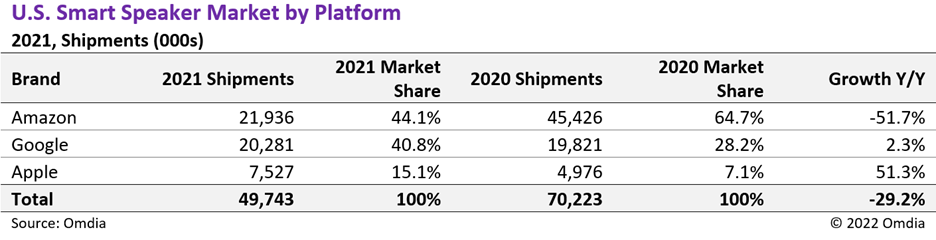
Research from Omdia.

Our guest this week is Joe Britt, CEO of Afero who is on the show to talk about securing IoT devices and the work his company has done with Home Depot. The home improvement retailer chose Afero to build out its custom app to control HomeDepot-branded products such as light bulbs, fans, and more. Britt explains what Home Deport was looking for and what he’s learned from his experience in the last eight years of working with IoT products. Britt, who was a founder of Danger, lays out the ways IoT platforms differ from traditional computing platforms and explains what companies with unsecured devices should do with them. Enjoy the show.

Hosts: Stacey Higginbotham and Kevin Tofel
Guest: Joe Britt, CEO of Afero
Sponsors: Somfy and Pantacor

  • How the EU is tackling the competitive barriers caused by data concentration
  • Investing in security can improve the bottom line
  • How to rethink subscriptions for connected hardware
  • How Home Depot’s smart home strategy has changed
  • What should we do with older insecure devices?

The post Episode 360: Europe’s planned IoT data law appeared first on IoT Podcast - Internet of Things.

Thursday, February 17, 2022

IoT Podcast Episode 359: Meet the man who “invented” the IoT back in 1985

The National Institute of Standards and Technology has finally released its plans for securing the IoT, so we discuss what the plans are for a consumer-oriented cybersecurity label. We then give a quick update on the Sigfox receivership and Intel’s plan to purchase Tower Semiconductor before spending a large chunk of time on Apple’s AirTags and how ubiquitous and cheap trackers change the game for privacy. We share new subscription plan revenue data for the manufacturing sector and for IoT devices, and unsurprisingly the folks at Zuora are optimistic. We then share some details on Anthony Levandowski’s plans to build a peer-to-peer cellular network for self-driving vehicles that looks a lot like Helium, and a sad story about bionic eyes made by a company that is going out of business. We end by answering a listener question about smart controls for 220-volt or 240-volt outdoor heaters.

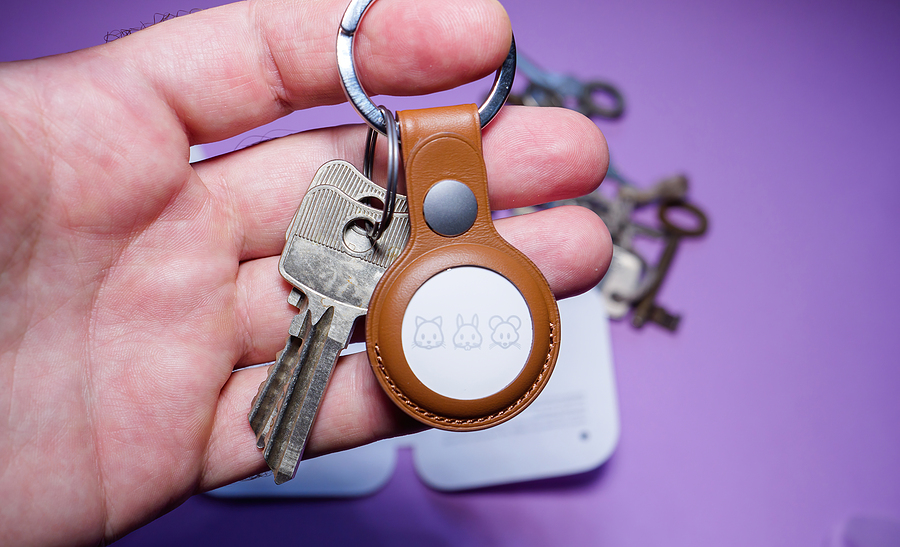
Apple is trying to prevent folks from abusing AirTags to stalk people.

Our guest this week is Peter Lewis, who was a co-founder of Cellular One and the originator of the term “Internet of Things.” Lewis coined the term and described the connection between wireless sensors, cellular networks, and the internet, all the way back in 1985 during a speech he gave to the Congressional Black Caucus Foundation 15th Annual Legislative Weekend in Washington, D.C. This week, you can hear the relevant segment of the speech and he shares why he was so eager to get things connected to the Internet 37 years ago. He also talks about what surprised him as the IoT really gained ground and discusses what he’s doing today. This is a great history lesson that everyone should know.

Hosts: Stacey Higginbotham and Kevin Tofel
Guest: Peter Lewis, originator of the term “Internet of Things”
Sponsors: Somfy and Pantacor

  • What does NIST want for consumer IoT security? We tell you.
  • Who’s bidding for Sigfox?
  • Why Apple’s AirTags are such a problem
  • The IoT was created by a cellular executive to gain new subscribers
  • What the creator of the phrase “internet of things” didn’t see coming

The post Episode 359: Meet the man who “invented” the IoT back in 1985 appeared first on IoT Podcast - Internet of Things.

Thursday, February 10, 2022

IoT Podcast Episode 358: Why Resideo’s First Alert buy makes sense

On this week’s show, we talk about the Resideo purchase of smoke detector company First Alert for $593 million and why it makes sense. Then we focus on connectivity with an update on the Sigfox receivership and a look at the annual report from the LoRa Alliance covering the adoption of LoRaWAN networks around the world. For Raspberry Pi owners we have good news on the OS front and for people who want to load the Pi OS from the network. Then we talk about two government efforts to track potholes and beach trash using AI and sensors. On the chip front, the big news is that Nvidia has formally stepped back from its plan to acquire ARM, leaving ARM with nothing to do but plan a public offering. Also, Simon Segers has stepped down as the CEO of ARM and was replaced by Rene Haas, the president of ARM’s IP business. Meanwhile, Intel is embracing RISC-V, and we talk about why that matters. In smaller news, Netgear’s latest routers make it much easier to create a separate IoT network, Apple’s VR/AR glasses are real, and Samsung’s big event this week didn’t offer up any IoT news, but we did see the end of Bixby. We end by answering a listener question about using Matter in industrial settings.

Associate Professor Prem Prakash Jayaraman of Swinburne University works with Dr. Felip Marti Carrillo and Dr. Yong-Bin Kang (left to right) to test cameras on garbage trucks in Brimbank, Australia. Image from Swinburne University.

Our guest this week is Yana Welinder, the CEO and co-founder of Kraftful. She joins us to discuss the new analytics software Kraftful has launched and to broadly discuss best practices for connected device apps. Unsurprisingly, getting a device connected quickly and easily is the most important consideration for most connected device makers, and she’ll discuss how to make that easy. But she also talks about when apps make sense compared with voice interfaces or automated routines. We end our conversation with her take on what the upcoming Matter smart home interoperability protocol might mean for her business and for consumers at large. Enjoy the show.

Hosts: Stacey Higginbotham and Kevin Togel
Guest: Yana Welinder, the CEO and co-founder of Kraftful
SponsorsRightpoint and Hologram

  • Smoke detectors have a huge opportunity in the smart home
  • Using sensors and computer vision to make cities better and beaches cleaner
  • ARM’s next step should include a plan for RISC-V
  • If your users can’t connect their device in 10 minutes, they’re gone
  • Imagining a world where every product has an app is a nightmare


The post Episode 358: Why Resideo’s First Alert buy makes sense appeared first on IoT Podcast - Internet of Things.
Thursday, February 3, 2022

IoT Podcast Episode 357: Too many companies are paying ransomware

This week we kick off the show with an explainer on Sigfox’s receivership before delving into grim news from Claroty, a cybersecurity firm.  Claroty surveyed 1,100 IT and OT (operational technology) pros and discovered that three out of five of them worked at companies that paid up after a ransomware attack. I can’t believe it, but the research offers compelling reasons why. We then move over to some Matter news, starting with an update from Assa Abloy on backward compatibility for its Yale locks, and concluding with an update from Nanoleaf, which is delaying some of its products thanks to Matter being delayed. We then cover Walmart teaming up with Angi to install some smart home products for consumers as part of the rush to invest in smart devices that we discussed last week with Angi’s CEO. In quick news, we talk about a new IoT satellite service, an acquisition by connected health company Withings, and Peloton’s new $90 smart heart rate monitor. We conclude the show with a good idea from one of our listeners who set up a sort of call system using Wyze outlets and smart bulbs.

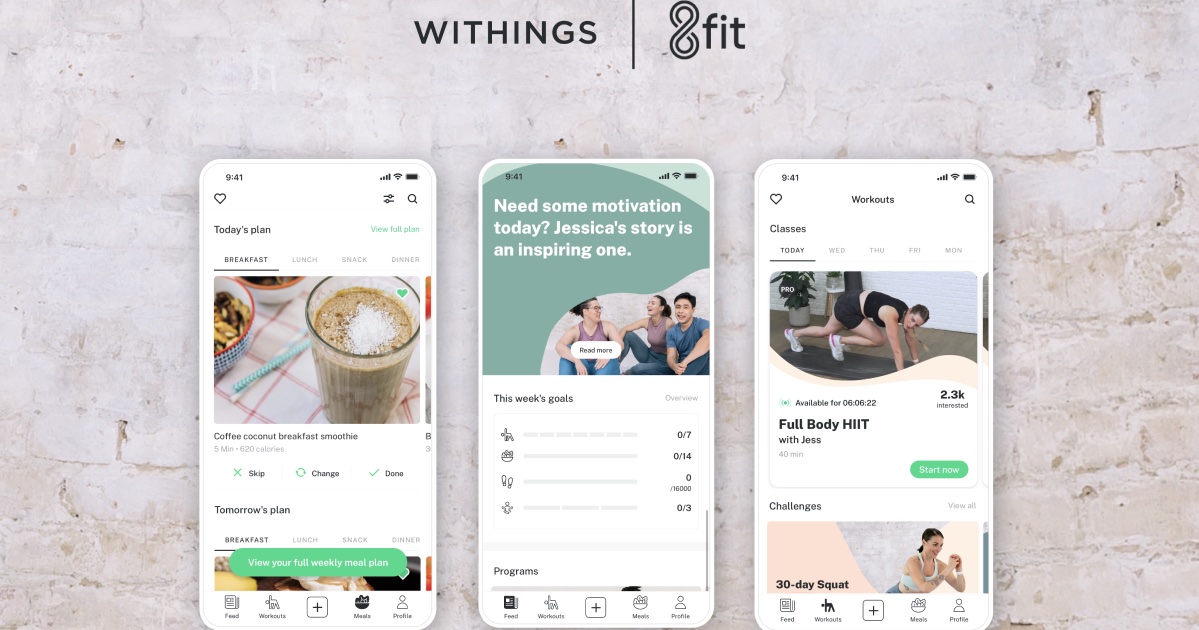
Withings purchased a subscription workout app to add to its wellness hardware. Image courtesy of Withings.

Our guest this week is Simon van der Jagt, CEO of Nowi. Nowi makes an energy harvesting chip that is easier to use in a variety of sensors. We talk about why, before moving to a discussion of plug and forget devices, and what those will entail. The idea is that companies can build energy-harvesting sensors that could last for the life of a road or container or other product, and thus we can forget about them. We also talk about trends in designing chips for the IoT such as sales challenges and the growing demand for highly specific chips that can consume the least amount of power while getting the work done. Enjoy the show.

Hosts: Stacey Higginbotham and Kevin Tofel
Guest: Simon van der Jagt, CEO of Nowi
SponsorsRightpoint and Hologram

  • What led to Sigfox’s “bankruptcy”
  • You’ll never believe the size of these ransoms
  • Is Matter causing product delays?
  • What kind of chips does the IoT need?
  • Let’s design plug and forget devices

The post Episode 357: Too many companies are paying ransomware appeared first on IoT Podcast - Internet of Things.

Thursday, January 27, 2022

IoT Podcast Episode 356: Smart home improvement is now a thing

This week’s show starts with a healthy portion of chips, with the main course being Nvidia’s reported acceptance that its deal to acquire ARM isn’t likely to happen. We then turn to the U.S. Commerce Department’s plans to combat the chip shortage crisis, new ML chips from Silicon Labs, Google’s first TinyML Coral microcontroller, and an Arduino-like RISC-V product. Feeling full from all of this chip ingestion we discuss how Peloton is trying to work out its excess inventory challenge. Two smart tracking companies raised some funding this week: Pebblebee on the consumer side and newly launched Tag-n-Trac for shipping and logistics. We then discuss how Thread turned the Wemo Stage controller from “meh” to “must-have” and share details of new Philips Hue fixtures. Rounding out the episode is a listener question from Michael asking if Alexa can control his Google Nest thermostat.

Peloton is changing its production plans, but we still think it has value. Image courtesy of Peloton.

Our guest this week is Oisin Hanrahan who is the CEO of Angi, the home services company formerly known as Angie’s List. He’s on the show to talk about startling data his company discovered late last year. According to Angi’s data, for the first time ever, smart home investments were in the top three home improvements made by homeowners. Hanrahan explains what homeowners are doing and why they are willing to invest in more technology. He also offers advice to device makers who want to attract the pro-installer business and makes recommendations on how pros think about the smart home. It’s a great interview.

Hosts: Stacey Higginbotham and Kevin Tofel
Guest: Oisin Hanrahan, CEO of Angi
Sponsors: Rightpoint and Hologram

  • Nvidia may be giving up on its ARM-acquisition
  • $52 billion for U.S. chip factories won’t fix the real problem
  • Peloton could learn a thing or two from Apple
  • Painting, bathroom remodels, and smart home drive home improvements
  • What a pro wants

The post Episode 356: Smart home improvement is now a thing appeared first on IoT Podcast - Internet of Things.
Thursday, January 20, 2022

IoT Podcast Episode 355: Get ready for an active FTC and energy storing appliances

The big story this week in IoT was the joint venture between Ford and ADT to add smart home security to cars through an in-vehicle security system. Then we discuss the FTC and Department of Justice reconsidering how they evaluate mergers. We also explain variations on Wi-Fi, from the launch of new Wi-Fi 6E gear to the coming Wi-Fi 7 standard. We include a blast from the past with an update on Misty Robotics and, in other robot news, we cover research from the MIT Media Lab on giving robotics a personality. We’re also sharing news about energy harvesting Bluetooth company Atmosic, which has a new product and $72 million in funding. In smaller news, we are excited about smart home company Tado going public, and a new way of handling IR sensing that could figure out the nutritional value of food. We stick with the food topic by discussing my latest purchase, a smart induction range from GE Appliances. Finally, we listen to a question from Kevin in St. Louis about using Amazon Sidewalk or LoRaWAN in wearables.

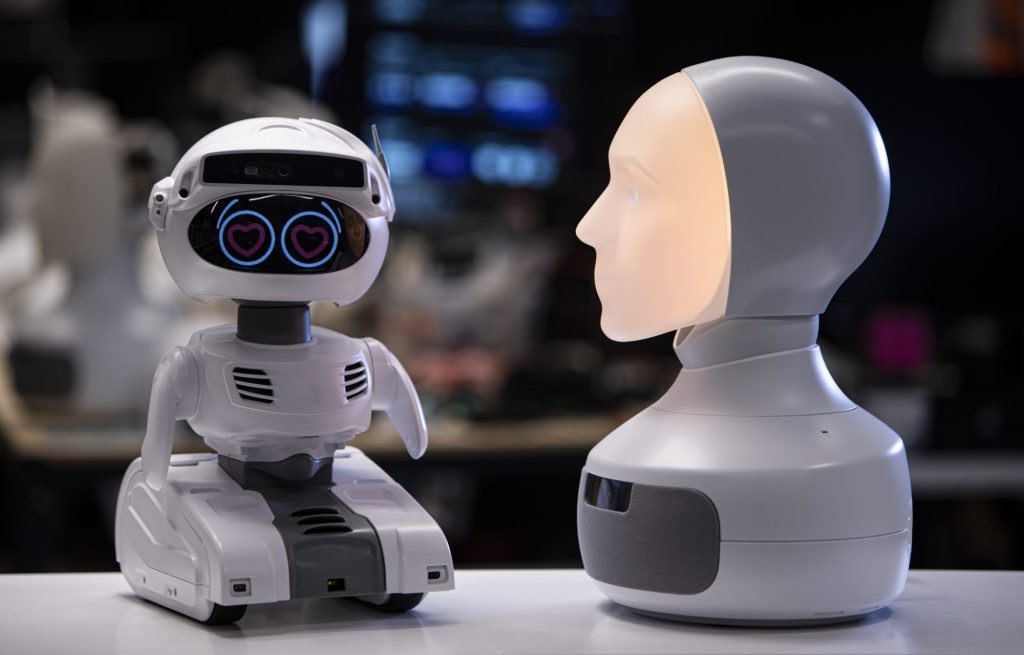
Furhat Robotics has acquired Misty Robotics for better social robotics. Image courtesy of Furhat. 

Our guest this week is Kalais Nair, a co-founder and director at Plentify. The South African startup is trying to help power companies store energy generated by renewable sources for later use by home appliances. Nair discusses how his startup is trying to use sensors and data analysis to make it possible to power a fridge, a heat pump, or a water heater when power is cheap and clean, for use when renewable energy isn’t available. He also explains how important it is to manage energy across many homes, not just on an individual basis. For the last five years, Plentify has sold its electronics and algorithms for water heaters in South Africa, and now he’s bringing the tech to the U.S. and hoping to convince appliance manufacturers to put the Plentify tech into their own products.

Hosts: Stacey Higginbotham and Kevin Tofel
Guest: Kalais Nair, co-founder and director at Plentify
Sponsors: Rightpoint and Hologram

  • Canopy will bring smart home security to cars
  • U.S. merger guidelines are set to change
  • Let’s talk about Wi-Fi 6E and Wi-Fi 7
  • Smart appliances will become a source of stored energy
  • How Plentify will use insurers and utilities to bring energy storage to homes

The post Episode 355: Get ready for an active FTC and energy storing appliances appeared first on IoT Podcast - Internet of Things.

Thursday, January 13, 2022

IoT Podcast Episode 354: Google’s Soli pivot and Amazon’s Sidewalk news

This week Google reminded us that we don’t actually own our connected products when it removed functionality from grouped Nest speakers after losing a patent case filed by Sonos. Amazon’s Sidewalk network is getting a boost and this should spark a really interesting fight between LoRaWAN and Sidewalk in the coming years. We then talk about why sensors should have standards or maybe just a certification body for calibration, pay-what-you-want plans for IoT services, and Google’s surprise pivot around its Soli radar technology. The chip shortage has made it tough for Canon to find the silicon used to enforce its digital rights management that locks people into buying Canon toner cartridges, and we love to see it. In other news, researchers can detect malware using a Raspberry Pi and electromagnetic frequencies, Abbott Labs is getting into consumer wearables that track glucose and ketones, Netatmo launches its first Thread sensor, and Wind River will be acquired for $4.3 billion. Finally, we take listener feedback on accessibility and update an answer about Wi-Fi sensors.

Abbott LAbs is launching a new line of wearables for measuring glucose, ketones, and more. Image courtesy of Abbott Labs.

Our guest this week is Yoon Ho Choi, president of the Home Connectivity Alliance, which launched last week at CES. Choi joins me to discuss the reason the HCA exists, how it’s recruiting new members and why we want our appliances to interoperate. He addresses questions about security, why the HCA is promoting cloud-to-cloud integrations instead of local ones, and if the HCA wants to work with the Matter protocol. It’s still unclear what the HCA wants to produce in terms of APIs or certifications, but it’s clear that the companies involved recognize that collaboration will be essential for building worthwhile intelligence into washers, dryers, HVAC systems, TVs, and more. Enjoy the show.

Hosts: Stacey Higginbotham and Kevin Tofel
Guest: Yoon Ho Choi, president of the Home Connectivity Alliance
Sponsors: Twilio and Silicon Labs

  • Google loses Sonos patent spat, but so do consumers
  • Amazon’s Sidewalk plans set up a low-power wide-area network fight
  • Has Google given up on Soli?
  • What exactly is the HCA trying to create?
  • Why the HCA is embracing a cloud-to-cloud strategy

The post Episode 354: Google’s Soli pivot and Amazon’s Sidewalk news appeared first on IoT Podcast - Internet of Things.
IoT Podcast Episode 437: Goodbye and good luck

This is the final episode of The Internet of Things Podcast, and to send us off after eight years, we don’t discuss the big news of the day ...